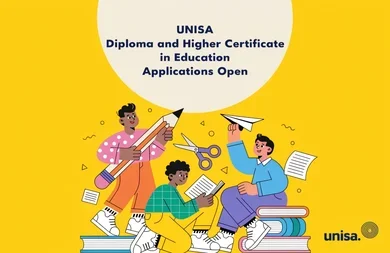
Are you passionate about shaping young minds or embarking on a career in education in South Africa? While a Bachelor of Education (BEd) might be your ultimate goal, UNISA offers excellent alternative pathways through its Diploma and Higher Certificate qualifications in Education. These programmes are designed to equip you with essential skills for Open Distance Learning (ODL) and serve as a solid foundation for further undergraduate studies. Understanding these qualifications is key for many prospective students. A Higher Certificate in Education, typically a one-year NQF Level 5 qualification, can be your first step, while the Diploma in Early Childhood Care and Education offers a more in-depth three-year NQF Level 6 programme.
Understanding UNISA's Education Qualifications for 2026
UNISA provides accessible entry points into the education sector with qualifications designed for diverse aspirations. These programmes are ideal for those seeking to gain foundational knowledge or meet the minimum requirements for entry into a UNISA Bachelor of Education degree.UNISA Higher Certificate in Education
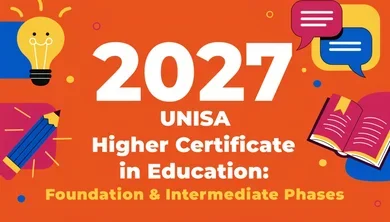
The Higher Certificate in Education is an NQF Level 5 qualification, requiring 120 credits. While not a professional teaching qualification on its own, it is a crucial stepping stone. It's perfect for individuals aiming to build foundational knowledge and skills or to meet the minimum requirements for entry into a UNISA Bachelor of Education degree. UNISA offers several specialisations within the Higher Certificate in Education, including:
- Foundation Phase and Intermediate Phase Teaching
- Senior Phase and Further Education and Training (FET) Teaching
- Senior Phase Maths and Science Education
UNISA Diploma in Early Childhood Care and Education
For those with a specific passion for early childhood development, UNISA offers a three-year, NQF Level 6 Diploma in Early Childhood Care and Education. This programme provides a comprehensive understanding of child development and education, preparing students for rewarding careers in early learning settings.
Admission Requirements for UNISA Education Courses (2026)
Meeting the specific admission criteria is essential for your application. For the 2026 academic year, UNISA has set the following requirements for these programmes:
Academic Point Score (APS)
A minimum APS score of 18 is required for admission to both the Diploma in Early Childhood Care and Education and all listed Higher Certificate in Education qualifications. This score is calculated based on your Grade 12 results (or equivalent).
Language Proficiency
For the Diploma in Early Childhood Care and Education, a minimum of 40% in the language of teaching and learning (usually English or Afrikaans) is necessary. If you are applying for a Higher Certificate in Education and have completed your studies via TVET colleges, you'll need at least 30% in the language of teaching and learning, or an equivalent of at least 40% for a National Certificate (Vocational) Level 4.
General Requirements
All applicants must possess a valid email address and cellphone number. International applicants will need a valid passport. Meeting the minimum admission requirements does not guarantee placement, as spaces are limited and allocated based on specific selection criteria.
It's important to note that direct entry into a Bachelor of Education degree typically requires a higher APS score, usually 23. These diploma and higher certificate courses provide a viable alternative if you don't meet that threshold.
UNISA Application Dates and Process for 2026
Applications for undergraduate qualifications, including the Diploma and Higher Certificate in Education for the 2026 academic year, will re-open from 3 November to 19 December 2025. Ensure you submit your application within this critical period.
How to Apply Online
All applications must be submitted online through the UNISA admissions portal. You will need to create an account using a valid email address and cellphone number. Be prepared to upload copies of your academic records, ID document (or passport), and any other supporting documents as required. All documents must be uploaded by the application closing date.
Application Fee
A non-refundable application fee of R150 is payable. You will receive a student number, after which you can proceed to pay the application fee via the provided payment methods. Keep proof of payment for your records.
Important Considerations for Your Application
Meeting the minimum admission requirements does not guarantee placement, as spaces are limited and allocated on a first-come, first-served basis, or according to specific selection criteria. UNISA also offers Recognition of Prior Learning (RPL), which may allow you to gain credit for previous learning or experience.
If you have qualifications obtained outside South Africa, they must be evaluated by the South African Qualifications Authority (SAQA) before you can register. Remember, you can apply for up to three qualifications, but completing a lower-level qualification does not automatically guarantee admission to a higher-level one. All applications must be submitted during the prescribed application period.
UNISA's Diploma and Higher Certificate qualifications in Education offer valuable entry points into the field of education for many South African students. By carefully reviewing the admission requirements, understanding the application process, and adhering to the deadlines, you can position yourself for a successful application for the 2026 academic year. These programmes are designed to build your capacity and prepare you for higher education in teaching and learning. Plan ahead and ensure all your documents are in order for the 3 November to 19 December 2025 application window.