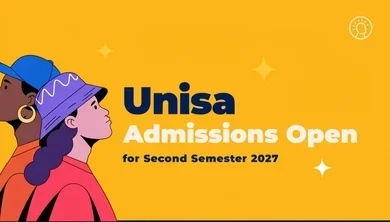
Planning your academic journey for 2027? The University of South Africa (Unisa) remains a premier choice for many, offering flexible distance learning across a wide spectrum of qualifications. Understanding the application process, especially the distinction between first and second-semester intakes, is crucial. While the main application period for the 2027 academic year is anticipated in late 2026, specific details for the second-semester intake are released closer to the time. Let’s break down the essential information you need to navigate your Unisa application successfully.
Unisa's Application Cycles Explained
Unisa typically operates with two main application periods each year: one for the first semester and year-long modules, and a more limited intake for the second semester.
For the 2027 academic year, undergraduate applications for the first semester or year modules are generally expected to open around 18 August 2026, with a closing date anticipated for 10 October 2026. These dates are subject to change, so bookmarking the official Unisa website is highly recommended.
Second-semester 2027 applications have historically opened around April to early May of the respective academic year. This intake is typically limited to qualifications featuring 'semester modules' and usually excludes programmes such as the Bachelor of Education (BEd) or Bachelor of Laws (LLB).
Essential Unisa Application Requirements
To be considered for admission, all applicants must meet the following fundamental requirements:
- A valid South African identity document (ID) or passport.
- Certified copies of your Grade 12 (Matric/NSC) results or equivalent. For applicants with prior tertiary studies, certified academic transcripts are required.
- International qualifications must be accompanied by a SAQA (South African Qualifications Authority) evaluation certificate.
- Ensure all submitted certifications are recent, typically not older than six months from the date of certification.
Navigating Unisa's APS Score and Application Fees
Unisa employs a specific Admission Point Score (APS) system to evaluate applications. This score is calculated by summing the points awarded for your best six subjects, usually excluding Life Orientation. Each qualification has a unique minimum APS requirement; for instance, a BEd might require an APS of 23, while a Higher Certificate in Education could have a minimum of 18.
It is vital to understand that meeting the minimum APS score does not guarantee admission, as selection also depends on the availability of spaces within the chosen qualification.
A non-refundable application fee, typically around R150.00 (or R140-R150), is usually required for all online applications. This fee must be paid by the application closing date to ensure your application is processed.
The Online Application Process and Deadlines
All Unisa applications are processed strictly online. During the application period, you can typically select up to two or three qualifications, which should be ranked according to your preference.
Late applications are generally not considered, so adhering to the stipulated deadlines for submission of both the application and all required documentation is paramount. For new applicants, completing the First-Year Experience (FYE) MOOC may be a prerequisite before accepting an offer and proceeding with registration.
Supporting Your Application: Document Certification
When submitting supporting documents, such as your matric results or transcripts, ensure they are certified copies. The certification should generally not be older than six months. This means you'll need to get official copies stamped by an authorised body, like the South African Police Service (SAPS) or a Commissioner of Oaths, within the last six months.
Applying for NSFAS Funding
For South African students who require financial assistance, the National Student Financial Aid Scheme (NSFAS) is a critical resource. While Unisa handles admissions, NSFAS manages bursaries. Ensure you are aware of the NSFAS application dates, which typically run parallel to university application periods, and submit your application via the official NSFAS website ([VERIFY: NSFAS website URL]). Meeting NSFAS eligibility criteria is separate from Unisa's admission requirements.
Successfully applying to Unisa for 2027 involves thorough preparation. Stay informed about the expected application opening and closing dates for both first and second-semester intakes. Ensure all your required documents are certified correctly and within the six-month validity period. Familiarise yourself with the APS score calculation and be mindful of the application fee and its payment deadline.
Remember, applications are exclusively online, and admission is competitive, relying on academic merit and available space. Regularly checking the official Unisa website for the most up-to-date information is your best strategy to ensure a seamless application process.